Renting a car in Cape Town: what insurance actually covers, how tolls and parking attendants work, the safety habits locals never skip, and the four day-trip routes worth the keys.
A car in Cape Town is not transport. It is permission. Permission to leave when the light is good, to stop at the farm stall nobody wrote about, to change your mind about lunch halfway down Chapman's Peak. Nothing else in this city buys you that.
But a hire car also hands you a set of small local rules that no rental desk explains properly — the parking attendant in the yellow bib, the toll plaza on the N1, the fine print on the excess waiver, the road you should not take after dark. Learn those in ten minutes here, and the rest of the trip belongs to you.
Renting a car in Cape Town: what to book and what to decline
South Africa drives on the left. Most hire cars are manual, so specify automatic when you book or you will be relearning a clutch on Kloof Nek at rush hour. You need your home licence in English (or an International Driving Permit alongside it), a credit card in the driver's name for the deposit, and a driver over 23 for most fleets.
The real decision is insurance. Standard cover in South Africa leaves a large excess — often R15,000 to R25,000 — and pointedly excludes tyres, windscreens, undercarriage and water damage. Super cover that zeroes the excess and includes glass and tyres costs more per day and is almost always the cheaper decision, because gravel chips on Winelands back roads are routine, not bad luck.
Compact hatchbacks handle everything from the City Bowl to the Garden Route. You do not need a 4x4 unless a lodge has specifically told you so. Do check the spare, the jack and the tyre tread before you leave the lot, and photograph every existing scratch.
Insider tips
- — Book automatic transmission explicitly — supply is limited in December and January.
- — Take super cover with tyre and glass; the excess gap is the trip's biggest hidden cost.
- — Airport pickup adds a surcharge; a city branch is often cheaper if your first day is on foot.
"Freedom on these roads isn't about the car. It's about knowing which twenty minutes of local knowledge you're missing."
Tolls, e-tags and fuel: how paying works here
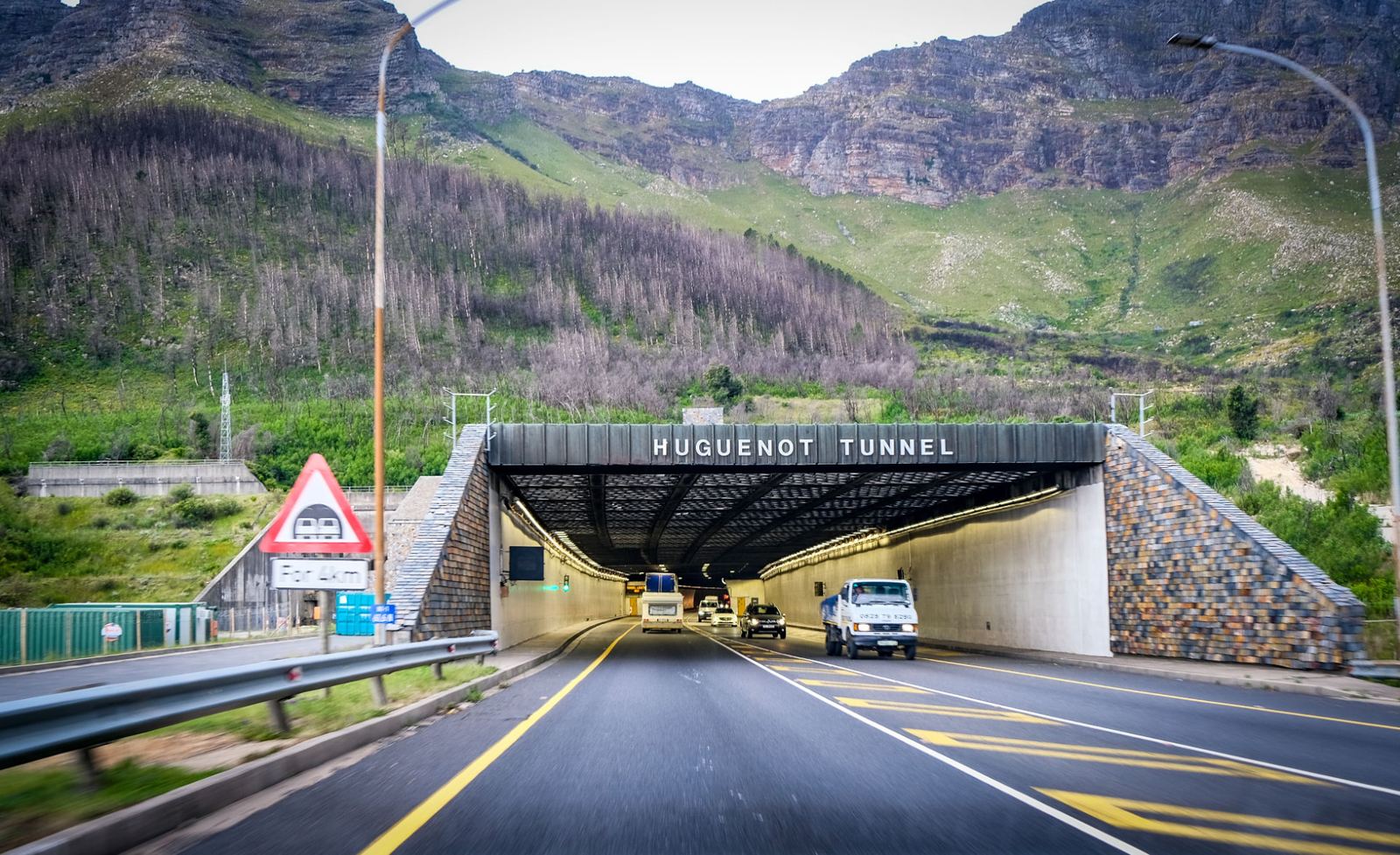
Cape Town itself is toll-free. You will only meet toll plazas on longer runs: the N1 north towards the Huguenot Tunnel and Winelands beyond Paarl, and the N2 east on the Garden Route past the Tsitsikamma. Plazas take cash and cards, tolls typically run R20 to R80 per gate, and there is no Gauteng-style e-toll gantry system in the Western Cape — so ignore anyone trying to upsell you an e-tag.
Fuel stations are full-service. An attendant fills the tank, cleans the windscreen and checks oil and water; R10 to R20 is the normal tip. Many smaller stations still prefer cash, and rural stops on the Garden Route can be card-offline, so keep a few hundred rand in the car.
Speed limits are 60km/h urban, 100km/h on secondary roads and 120km/h on highways, enforced by both cameras and roadside units. Fines from a hire car reach you weeks later with an admin fee attached.
Insider tips
- — Carry R500 in cash for tolls, fuel attendants and parking guards.
- — Fill up before the Winelands and before the long Garden Route stretches between towns.
Parking in Cape Town, including the man in the yellow bib
Street parking in the City Bowl, Sea Point, Camps Bay and around the Waterfront is metered on weekdays, roughly R10 to R20 an hour, usually paid to a uniformed marshal or through an app. Beyond that, you will meet informal car guards: registered or self-appointed, they watch your car while you are away. R5 to R20 on your return is the local norm, paid when you leave, not when you arrive.
Shopping centres and the V&A Waterfront use ticketed garages — validate at the machine before you walk back to the car. Two rules make the rest simple: never leave anything visible inside the car, not a jacket, not a charging cable; and always park under a light after dark, even if it means a two-minute walk.
Insider tips
- — Pay car guards on departure, in small coins, and greet them on arrival.
- — Boot bags before you arrive, not in the parking bay — being watched matters more than being locked.
Driving safety in Cape Town, honestly
Cape Town is a straightforward city to drive. The risk is not mysterious, it is specific: doors unlocked at intersections, valuables on seats, GPS routes that shortcut through areas you would not choose, and driving tired after a wine day. Keep doors locked and windows up at traffic lights, especially at night. Treat a red light at 2am as a yield if the intersection is empty — locals do.
Two mapping habits matter. Set your navigation to avoid unfamiliar shortcuts across the Cape Flats between the airport and the city, and download offline maps, because signal drops in Bain's Kloof, parts of Chapman's Peak and long Karoo-side stretches.
If a wine tasting is on the plan, the answer is not moderation, it is a driver. South Africa's limit is 0.05g/100ml and roadblocks are common on Friday and Saturday nights. Our guided Winelands days exist precisely so nobody has to negotiate the R44 after a five-estate tasting.
Insider tips
- — Lock doors, hide bags, and never leave the car running at a viewpoint.
- — Emergency numbers: 10111 police, 10177 ambulance, 112 from a mobile.
- — Book a driver for Winelands and late Peninsula sunsets — it is a safety call, not a luxury.
Four day-trip routes that justify the rental
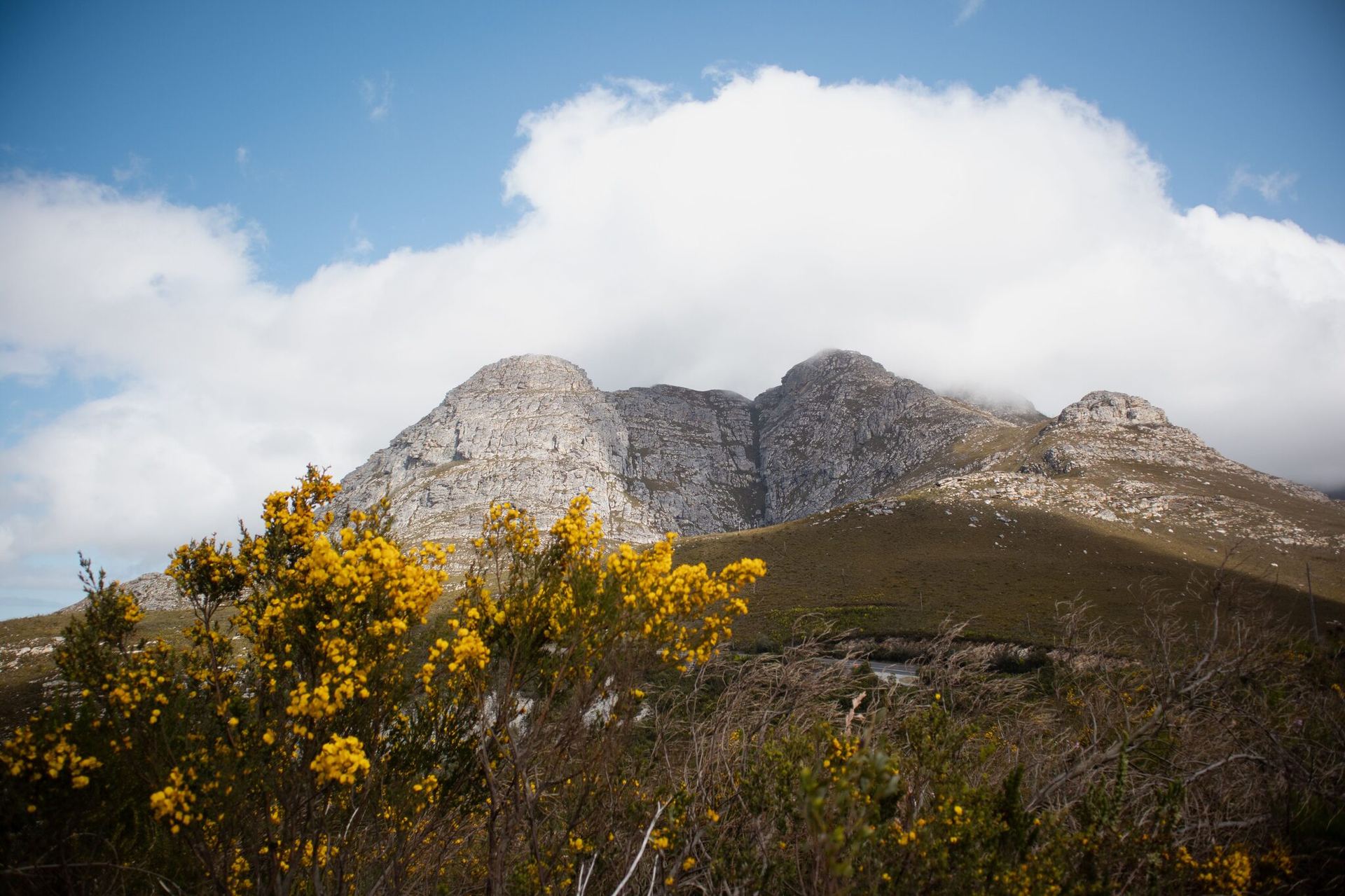
The Cape Peninsula loop is the classic: Camps Bay, Chapman's Peak Drive (about R60 toll, closed in high wind), Cape Point, Boulders penguins and Simon's Town, home along the False Bay coast. Give it a full day and start by 08:00.
The Winelands run is Stellenbosch, Franschhoek and the Helshoogte Pass in one arc — 45 minutes out, a whole day inside. Cape Point in the morning and wine in the afternoon is the one combination we would talk you out of.
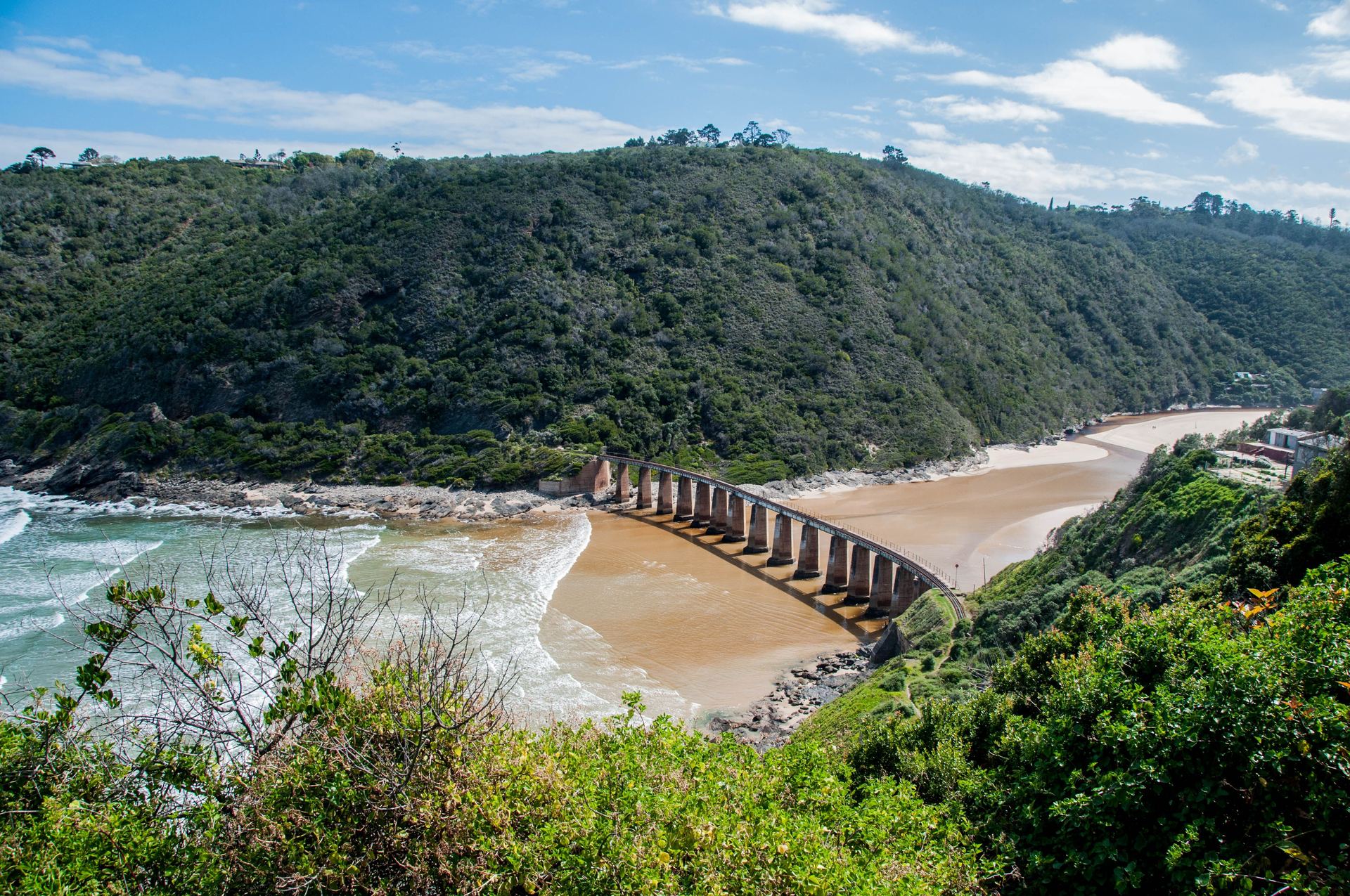
The Whale Coast follows the R44 through Betty's Bay to Hermanus: cliff-path whale watching from June to November, and one of the best coastal drives in the country. The Garden Route is a different animal — Knysna is roughly six hours from Cape Town on the N2, so give it three nights or don't give it any.
Bain's Kloof Pass and the Breede Valley are the local favourite nobody markets: an hour and a half out, empty roads, mountain passes and farm-stall pies.
Insider tips
- — Chapman's Peak closes for wind and rockfall — check before you commit to the loop.
- — Leave the city before 07:30 or after 09:30 to miss the N1 and M3 crawl.
When not to hire a car at all
If your trip is three days of City Bowl, Waterfront, Table Mountain and a Winelands day, a car will cost you more in parking, stress and one taxi-free glass of wine than it saves. Ride-hailing is cheap and plentiful in the central suburbs, and a guided day covers the routes where local knowledge is worth the most.
The sweet spot for most visitors is hybrid: guided days for the Peninsula and the Winelands, a hire car for the flexible days in between. That is how we build most itineraries, because the point was never the car. The point was arriving somewhere at exactly the right hour.
Key takeaways
- 01Drive on the left, book automatic, and carry your licence in English or an IDP.
- 02Take the zero-excess cover with tyres and glass — standard excess runs R15,000+.
- 03Cape Town has no urban tolls; expect R20–R80 plazas on the N1 and N2 only.
- 04Tip fuel attendants R10–R20 and car guards R5–R20 on departure.
- 05Never drive the Winelands after tastings — use a guide or a driver.
Plan your trip — keep reading
- Cape Town destination guideHow the city's areas and landmarks connect on a map.
- Garden Route destination guideDistances and overnight stops before you commit to the N2.
- Stellenbosch destination guideThe Winelands day where a driver beats a hire car.
- How many days do you need?Decide which days need a car and which don't.
- Guided days and private transfersLet someone else take the passes, the parking and the tastings.
Written by
Tendai Gumunyu
On-the-ground contributor for the SA Travelcations journal — writing from Cape Town, the Winelands and the Garden Route.